
Preach the word; be ready in season and out of season; reprove, rebuke, and exhort, with complete patience and teaching. For the time is coming when people will not endure sound teaching, but having itching ears they will accumulate for themselves teachers to suit their own passions, and will turn away from listening to the truth and wander off into myths. But as for you, always be sober-minded, endure suffering, do the work of an evangelist, fulfill your ministry. | 2 Timothy 4:2–5
A friend told me a story about going to the elders of the church concerned with how the church was operating. He did not just go with a complaint; he came equipped to show them what the Bible had to say. After describing his concerns and showing them what the Bible said about these things, one of the elders responded: we know it says that, but that doesn’t work. The general tone of the meeting was: that may be what the Bible says, but that isn’t functional in a broken world. My friend left that church frustrated.
It is easy to look down on that elder, but we often do the same thing. Whenever we sin, we are deciding that we know better than God. Martin Luther said that the breaking of any commandment begins with a breaking of the first: you shall have no other gods before me. The moment that we trust our own knowledge, over God, it is idolatry.
I mention this because on Sunday, we started into Paul’s household code. In it, Paul lays out God’s design for marriage, parenting, and the workplace. Confronting these ideals is difficult because they seem so different from the world that we live in. Since we are steeped in brokenness, God’s way sounds completely other. Our initial reaction is to question it, or even dismiss it, as impractical. So what do we do with this holy order that seems so far removed from our reality.
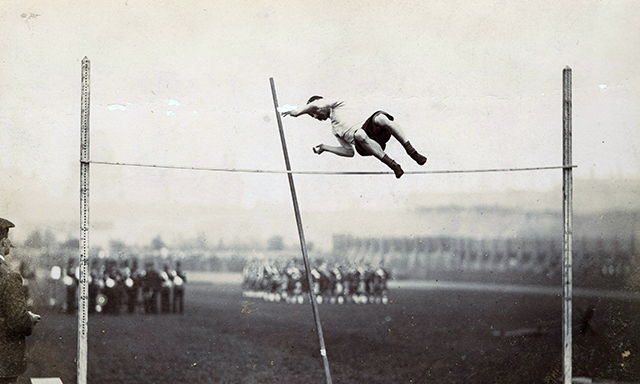
I am going to describe the options using the concept of a high bar that God is calling us to aim for. Some people respond to the disconnect between what God has designed and what we experience by lowering the bar. We see this in almost every human-centered Christian movement. They want to make it achievable so they lower God’s standard to make it something people can readily accomplish. God’s expectations are reinterpreted to make them a reasonable standard. While this makes people feel better about their efforts, it misinterprets what God’s goals are. He is not a legalist; He is not primarily concerned with us measuring up. People end up missing out on the sanctification that comes from submitting to God’s holy (other) way. This often leads to a sense of pride for those who uphold this lowered standard towards those who struggle to reach it. God’s standard becomes a subjective idea that can be redefined by human wisdom.
Another response that is common is to keep the bar high and to pretend that you are making it. This is common in Fundamentalist and Wesleyan traditions, where entire sanctification is believed — which is the idea that you can be fully cleansed of all sinning in this life. Perfect marriages, perfect kids, and the perfect life become expected and people feel the need to hide the ways that they fall short. There is a great deal of pride that grows up through this.
It sounds much like the prayer of the Pharisee in Jesus’ parable in Luke 18:
God, I thank you that I am not like other men, extortioners, unjust, adulterers, or even like this tax collector.
There is a strong us (holy) vs. them (unholy) focus, which includes a great deal of fear of being demoted from us to them. The stress of not only trying to be good enough, but also to pretend and hide when you don’t measure up is exhausting. I often refer to this option as beating people with the bar.
There is a third option, this is the one we take at Communion Church. We refuse to lower the bar because we believe that God put it there for a reason. We also don’t expect anyone to reach it. Some people find it strange to call people to an ideal that they will never reach, but that is the Christian life. God’s standard is not about self-help, but properly orienting ourselves to Him. As His holiness remains unattainable, it reminds us that this sinful world offers us far less than His goodness. The high bar also gives us something to aim toward.
I had a job doing landscaping when I was in high school. The guy who owned the company taught me the secret of straight lines while mowing: never look at where you are, but fix your eyes on a spot far ahead and move towards that. God’s standard works in the same way. We have all sorts of difficulties and distractions right in front of us. If we try to focus on each one of those, if we develop our idea of what is best from our current situation, we will be controlled by the moment. We need an ideal from outside of ourselves, to orient ourselves to.
As we do, we learn to love God’s holy way. The more we move toward His good (reap the benefits of following the created order), the more we recognize how far from it we actually are. Instead of this making us feel like we need to change it or feel beat down by it, this gives us a greater sense of His love. He doesn’t love us because of how well we perform or pretend; He loves us because He is love. The gap between who we are and who we should be is a reminder of the grace that He pours out.
This isn’t just an encouragement to us, but should transform how we interact with one another. The grace shown to us should be reflected in the grace we show one another. This is not a grace without a standard, but one that points to the ideal and encourages those who struggle to live it out. Paul points to this in his words to Timothy at the top when he says: with complete patience and teaching. We should patiently strive with one another towards the good that God has created and called us to. To lower the bar or beat people with the bar does not cause people to grow in their love for God’s glory and goodness.
God’s ideal does not change. We need to change to bring ourselves closer to His standard, and to be patient with one another as we all fall short of the glory of God.