
I am astonished that you are so quickly deserting him who called you in the grace of Christ and are turning to a different gospel—not that there is another one, but there are some who trouble you and want to distort the gospel of Christ. But even if we or an angel from heaven should preach to you a gospel contrary to the one we preached to you, let him be accursed. | Galatians 1:6–8
On Sunday, we began Ephesians 2, where Paul tells the story of salvation. It begins with a description of human depravity, calling us children of wrath, like the rest of mankind. The next two words, but God, show us that the Creator is not simply going to let His people continue on in the path that they have chosen for themselves. He acts to make us alive together with Christ and raised us up with him and seated us with him in the heavenly places in Christ Jesus. Our lives are no longer defined by what we do but by what has been done for us. We have been rescued from death and are secured for eternity.
Paul goes on in this section to make it clear why God does this when he states:
so that in the coming ages he might show the immeasurable riches of his grace in kindness toward us in Christ Jesus. | Ephesians 2:7
All of this is meant to show us the grace and kindness of God. This story of how He has rescued His people from the deserved punishment of their rejection and sin through the death of Jesus Christ is the central focus of His purposes. The plan of God is gospel-centered. All other parts of what He is doing in the world radiate out from the atoning work of Jesus Christ on the cross. All that exists and happens is because Jesus gave Himself for His people.
The immeasurable riches of grace do not end at the cross. God gives His world grace upon grace. Not only in blessings poured out, but also through an order to life that brings meaning and purpose. God’s law prioritizes what matters and promotes morality and ethics, purity and social justice. The church and religious observance give us rhythms that are scaled to our humanity. Spiritual disciplines allow us to participate with God in the process of maturity. All of these are benefits that come from belonging to God; they are also responsibilities of what it means to live out a life worthy of the calling to which we have been called.
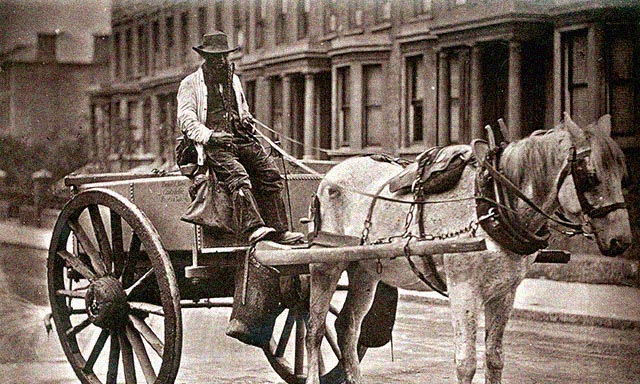
There is constant temptation for the people of God to allow the immeasurable riches of grace and kindness to us to obscure the gospel. To take all of these wonderful things that God offers us and to replace the gospel with them. In the sermon Sunday, Andrew referred to this as putting the cart before the horse. The obvious meaning of this phrase is that it is the horse that pulls the cart, not the other way around. To allow the cart to proceed the horse is going to lead to a stagnant cart.
This saying takes on additional meaning when we are talking about levels of importance rather than just a chronological order. To put the cart in front of the horse is not only going to keep the cart from going anywhere, but it now impedes the movement of the horse. An immovable cart takes away from the function of the horse.
This is what happens when we allow the cart of good works and order to take precedence over the powerful force of the gospel: the effectiveness of God’s self-revelation is diminished. It is not just the activity of the cart that is affected, but the very center of God’s purpose is obscured. If sin is disordered love, as Augustine defined it, then doing good works, prioritizing the church, and enjoying the many gifts that God gives, becomes sinful if it is at the expense of the glory of the gospel.
I push on this because I have seen quite a few authors proclaim that the gospel is not enough. This can be a true statement, like when James declares: faith without works is dead! He is not pitting the two against one another, but stating that the cart is a natural follower of the horse. If the gospel is there, then it has the power to bring about all of the changes that provide God’s immeasurable grace. This is how it reads in context:
For as the body apart from the spirit is dead, so also faith apart from works is dead. | James 2:26
Yet when many say that the gospel is not enough and that faith without works is dead, they tend to follow it up by describing how focusing on the cart can bring excitement back to your faith. There is a list of practices that can energize and give life. There is a cause or group that you can join that will provide purpose. As they do this, they will give a nod to Jesus Christ, as they redefine who He is: from the God-man who rescues and judges TO a great example of how we can also live a full life. In that, the horse has been slaughtered. Even before it gets to this point, there is a move away from the glory of God in salvation to the outworking of this faith in tangible means – the cart before the horse.
As a pastor, I want to talk about the cart. The Christian life and all that God is doing in His world and how to grow in sanctification – this is my job. I want to make sure that we are doing it in a way that grows our passion for the gospel. While the cart brings a great deal of depth and weight to our faith, without the gospel there is no faith. While the two are both important, they are not equal.
We find our identity in the gospel and then we adjust our beliefs and behaviors – our hopes and loves – to match it. While maturity in the faith will mean spending some time with the cart, it must always be with the horse at the head. As we live out our faith, we must always be confident where the power to do so comes from.
But we ought always to give thanks to God for you, brothers beloved by the Lord, because God chose you as the firstfruits to be saved, through sanctification by the Spirit and belief in the truth. To this he called you through our gospel, so that you may obtain the glory of our Lord Jesus Christ. So then, brothers, stand firm and hold to the traditions that you were taught by us, either by our spoken word or by our letter. | 2 Thessalonians 2:13–15